Milan Hlavsa, Rock Star of a Revolution,
Dies at 49
By JON PARELES
Milan Hlavsa, the founder, composer and bassist of the Plastic People of
the Universe, an underground Czech rock band that galvanized a movement for human rights
and democracy, died Friday at his home in Prague. He was 49.
The cause was cancer, the group's management said.
While countless rock bands tout themselves as revolutionary, the Plastic
People are among the handful who can claim they changed history. The group persisted for
two decades in the face of harassment and imprisonment while its members were treated as
dissidents by the Communist government of Czechoslovakia during the 1970's and 80's.
When the Plastic People were arrested along with other underground Czech
rockers in 1976, a coalition of students, artists and intellectuals arose to defend the
band. That coalition turned into the human rights movement that brought democracy to
Czechoslovakia in 1989. Yet the Plastic People, Mr. Hlavsa said in a 1988 interview, were
not political. "We were dissidents against our will," he said.
Mr. Hlavsa began playing rock 'n' roll as a teenager in the mid-1960's.
His first band was called the New Electric Potatoes, and he also played in the Blue
Monsters, the Vagabonds and the Undertakers. He started the Plastic People of the Universe
in September 1968, shortly after Russian tanks rolled into Prague to install a new regime
and suppress the liberalization known as Prague Spring.
The Plastic People had been listening to American bands including the
Doors, the Jefferson Airplane, the Mothers of Invention, the Velvet Underground, Captain
Beefheart and the Fugs, and at first they played versions of their American favorites. In
1969, two members of another band, the Primitives Group, joined the Plastic People: Josef
Janicek, on keyboards, and Ivan Jirous, who became the group's artistic director. Mr.
Jirous wrote manifestos about a "second culture," an artistic underground that
would ignore the official state culture, and the Plastic People spearheaded the movement.
From 1968 to 1970, the Plastic People were recognized as professionals by
the government, which provided equipment, rehearsal space and official bookings. But the
group's license was revoked in 1970. So the band scrounged instruments and Mr. Janicek
built homemade amplifiers using speakers from transistor radios. Members took day jobs,
and the band performed free at parties and high school dances. The group's sporadic shows
were hippie-style happenings. Members wore quasi-tribal costumes and warpaint or white
satin gowns and had a large flying saucer and a sign proclaiming "Jim Morrison Is Our
Father" onstage.
The Plastic People's lyrics, like the band's name, were in English at
first because the band associated English with the sound of rock 'n' roll. A Canadian
graduate student, Paul Wilson, joined the band from 1970 to 1972 as vocalist, guitarist
and Czech-to-English translator for lyrics until, in the early 1970's, the band began
singing in Czech.
In 1972 the saxophonist Vratislav Brabenec, who was a generation older
than the other band members and steeped in modern jazz, joined the Plastic People on the
condition that they perform their own material exclusively. Mr. Hlavsa came up with music
that merged Slavic dissonances with his own adamant bass lines and a psychedelic drone;
Mr. Brabenec's saxophone pushed toward free jazz, while Jiri Kabes added caustic viola
lines.
Their first album, "Egon Bondy's Happy Hearts Club Banned," was
released by Czech émigrés in France; the lyrics were by Egon Bondy, a poet who had been
banned since the Russian invasion. Later, Mr. Brabenec wrote most of the lyrics. The
Plastic People's songs were generally surreal and black-humored — only one,
"Hundred Points," was openly political — but any deviation from the
optimism of official culture was risky. In 1973, Mr. Hlavsa started a side project: DG307,
an avant-gardist collaboration with the poet Pavel Zajicek.
The Plastic People's professional status was reinstated in 1973, only to
be rescinded two weeks later. The Prague booking agency ruled that the band's music was
morbid and would have a "negative social impact" on Czech youth.
The group was allowed to perform only at private events. Since Czech law
allowed couples to book their own wedding entertainment, many of the Plastic People's
friends got married.
"We felt more like a guerrilla group than a rock 'n' roll band,"
Mr. Hlavsa said in 1989. "We didn't play this role intentionally — it was forced
upon us from outside."
As early as 1971, the police had interrogated band members, and in 1973
Mr. Jirous served a 10-month prison sentence for calling an old man a "baldheaded
Bolshevik." In 1974, the police stopped a scheduled Plastic People concert in South
Bohemia before it began. They rounded up fans, beat many, expelled dozens from school and
imprisoned six.
In 1976, after rockers presented what they called a festival of the second
culture, the police cracked down further. In a sweep of the rock underground, there were
27 arrests. The Plastic People's equipment was seized, along with many people's photos,
tapes and books; more than 100 people were interrogated. Seven received prison terms for
"organized disturbance of the peace," including Mr. Zajicek, Mr. Brabenec and
Mr. Jirous.
Intellectuals, including the playwright Vaclav Havel, publicly supported
the musicians. The intellectuals' response became a formal human rights movement named
Charter 77. "Before the trial, the circles of the writers and the poets and the
artists were separate," Mr. Brabenec said in 1989. "Afterward, they worked
together."
The Plastic People continued to perform and record despite increasing
police pressure. Mr. Jirous was arrested repeatedly and spent much of the 1980's in jail
for such offenses as reading a protest poem in public. The band's music became bleaker,
more gnarled and more elaborate.
"When you only play twice a year, there is plenty of time to work on
the music," Mr. Hlavsa said in 1989. The Plastic People recorded the albums
"Passion Play" and "Leading Horses" on Mr. Havel's farm, which the
secret police then burned down. Mr. Brabenec emigrated to Canada in 1982 after repeated
arrests, interrogations and threats.
Yet the Plastic People continued to perform when they could through the
1980's. They made one more album, "Midnight Mouse," in December 1987; it was
released by a company in the Netherlands. There were hints from the government in 1987
that the band would be allowed to perform, either as the Plastic People or under another
name, and possibly to tour abroad. But in 1988 the group fragmented.
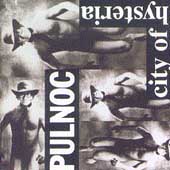
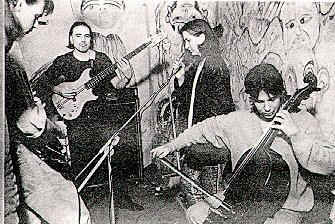
Mr. Hlavsa formed a new group, Pulnoc (Czech for midnight), which included
Mr. Janicek and Mr. Kabes, and in the spring of 1989 it toured the United States. It was
the eve of what Czechs called the Velvet Revolution, which forced the hard-line Communist
government from power in November 1989. Mr. Havel became president of Czechoslovakia.
Pulnoc recorded an album, "City of Hysteria," in New York City
in 1991. The Plastic People reunited in 1997 to mark the 20th anniversary of Charter 77
and recorded a live album. In 1999, the group toured the United States and performed with
Lou Reed from the Velvet Underground at the White House before Presidents Clinton and
Havel.
Mr. Hlavsa had surgery for lung cancer in May 2000. He was rehearsing new
music with the Plastic People when he became ill again and doctors discovered that the
cancer had spread to his brain. He is survived by his wife, Jana Nemcova; a son, Stepan; a
daughter, Magdalena; a brother, Vaclav; and his mother.
"Rock 'n' roll is the medium to express the situation of man in this
world and the world to come," Mr. Hlavsa said in 1989. "We don't do the music
just for the sake of music. You must be the author of your own life."